Cold-Weather Checklist · 7 min read
Winter Storage of Spray Foam Chemicals in Canada: A Contractor’s Cold-Weather Checklist
Ideal drum storage temperatures, what freeze/thaw cycles actually do to A-side and B-side chemistry, and the warm-up timelines that stop off-ratio spraying before it starts.
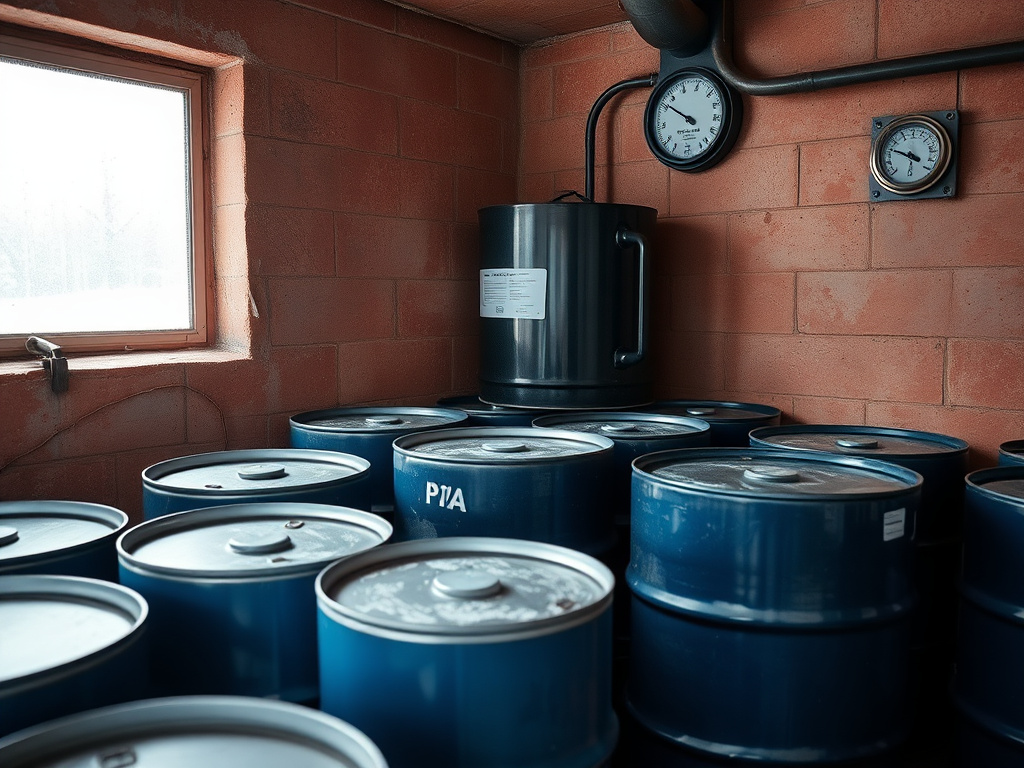
More off-ratio spraying complaints trace back to cold chemicals than to anything wrong with the proportioner. A rig can be perfectly calibrated and still produce poor rise, closed cell structure, or a spongy pass if the A-side (isocyanate) or B-side (resin/polyol) came off the truck or out of an unheated trailer too cold. Canadian winters make chemical storage discipline a core operating procedure, not an afterthought.
Ideal Storage and Spraying Temperature Ranges
Spraying Temperature
- Target range
- 70–90°F (21–32°C)
- Below this, expect
- Slower rise, ratio drift
Storage Temperature
- Absolute minimum
- 50°F (10°C)
- Below this, risk
- Viscosity increase, crystallization (ISO)
Chemical sets need to be at or near spraying temperature — roughly 70–90°F (21–32°C) — when they enter the proportioner for the pump and heater bands to keep up under load. Storage temperature has a lower floor: most manufacturers specify that drums should never sit below roughly 50°F (10°C) for any extended period, and ideally stay closer to 60–75°F (16–24°C) in the warehouse or job-site storage trailer between uses.
What Freeze/Thaw Cycles Do to A-Side and B-Side Chemistry
The A-side (isocyanate, or ISO) and B-side (resin/polyol blend) don’t respond to cold the same way, which is part of why cold storage causes off-ratio results rather than just slower spraying. Isocyanate is prone to crystallization at low temperatures — visible as solids or cloudiness in the drum — which changes its effective viscosity and can partially clog filters and transfer lines even after the drum is warmed back up, if the crystals haven’t fully redissolved. The resin/polyol side thickens as it cools, which slows its flow rate through the proportioner relative to the ISO side and throws off the mix ratio even when both sides read the correct pressure on the gauges.
Repeated freeze/thaw cycling — a drum that gets cold overnight on an unheated job site and warms up during the day, over and over across a job — is worse for chemical performance than a single cold exposure. Each cycle increases the risk of permanent viscosity change and reduces usable yield, even if the drum looks visually normal. Chemical that has cycled cold repeatedly should be tested with a short trial pass before committing it to a customer’s job.
Heated Storage Room Setup
Contractors running chemical inventory through a Canadian winter need a dedicated heated storage space — a warehouse bay, an insulated storage trailer, or at minimum a heated shed sized for the drum count you carry. Key setup points: keep drums off a concrete floor on pallets to avoid cold-transfer from the slab, use a thermostat-controlled heater with a min/max temperature log rather than eyeballing it, and position drums away from direct airflow from the heat source, which can create uneven warming across a single drum.
For contractors without warehouse space, drum blankets and barrel heaters are a practical field solution for job-site storage, but they’re a supplement to proper storage temperature — not a substitute for keeping chemical off a rig that sits outside overnight in sub-zero conditions for days at a stretch.
Shelf Life Considerations Alongside Temperature
Storage temperature and shelf life are related but separate concerns. Both the ISO and resin/polyol sides carry a manufacturer-stated shelf life — commonly in the 6–12 month range from date of manufacture when stored correctly — and cold exposure shortens that clock rather than pausing it. A drum stored below the recommended minimum for weeks at a time can reach the end of its usable shelf life well before the printed date if it was also subjected to repeated freeze/thaw cycling. Rotate stock on a first-in, first-out basis, and treat any drum with an approaching date and a rough winter behind it as a candidate for a test pass before it goes on a paying job.
It’s also worth tracking purchase dates against your typical order cadence. Contractors who buy in bulk to hit a volume-pricing tier ahead of a slow winter stretch sometimes end up holding chemical longer than planned if job bookings slip — balancing bulk-pricing savings against the realistic risk of chemical sitting in cold storage past its ideal window is part of planning a winter purchase, not just chasing the lowest per-set price.
Job Scheduling Around Cold-Weather Chemical Handling
Winter job scheduling should build in chemical logistics as its own line item, not an assumption that the rig shows up ready to spray. If chemical is coming straight from a supplier delivery rather than warehouse stock, confirm the freight was temperature-controlled and build in time to verify drum temperature before the crew starts — not after the first pass comes out wrong. For jobs scheduled first thing in the morning after a cold overnight low, either stage chemical in a heated space the night before or plan for a later start that allows drum-heating time, rather than pushing a crew to spray on chemical that hasn’t had enough recovery time.
Crews running multiple job sites in a single winter day should also sequence stops so the rig isn’t sitting fully loaded and unheated for hours between jobs in extreme cold — drums on an idle rig lose heat steadily even with the generator off, and a rig parked outside overnight between a late job and an early one the next day may need a longer warm-up cycle than the crew expects.
Pre-Job Warm-Up Timelines
A drum that has been sitting at or near the 50°F storage floor needs real time to come back up to spraying temperature — not just a warm cab or an hour next to a space heater. Depending on ambient conditions and the heating method, bringing a full 55-gallon drum from cold storage up to spray-ready temperature can take a full day or more with passive room heating, or several hours with a proper drum heater/blanket setup. Crews that pull cold chemical straight onto the rig and expect the proportioner’s inline heaters to make up the difference are the most common source of morning off-ratio complaints on winter jobs — inline heaters are sized to maintain temperature through the hose, not to bring a cold drum up to spec on the fly.
Signs Cold Chemical Is Causing Spray Quality Issues
- Slow or incomplete rise, especially noticeable on the first passes of the day.
- Off-ratio foam — wet/shrinking (resin-rich) or brittle/friable (ISO-rich) passes even though gauges read normal.
- Visible crystallization or cloudiness in the ISO drum before it goes on the rig.
- Quality improving noticeably a few hours into the job as ambient and inline heat catch up.
- Filters or transfer lines clogging more frequently in cold months than in summer.
If any of these show up repeatedly on winter jobs, the fix usually isn’t proportioner recalibration — it’s chemical storage and warm-up procedure. Building a consistent cold-weather storage routine protects both spray quality and the shelf life of chemical you’ve already paid for.
Need Winter-Grade Chemical Formulations?
Ask about cold-weather-rated chemical sets and drum-heating equipment built for Canadian job sites.