Rigs, Proportioners & Power
Spray Foam Rigs & Proportioners
Trailer, truck-mounted, and slide-in rigs built around Graco, PMC, and Gusmer proportioners — sized and powered for Canadian job sites and Canadian winters. New packages and refurbished units both available.
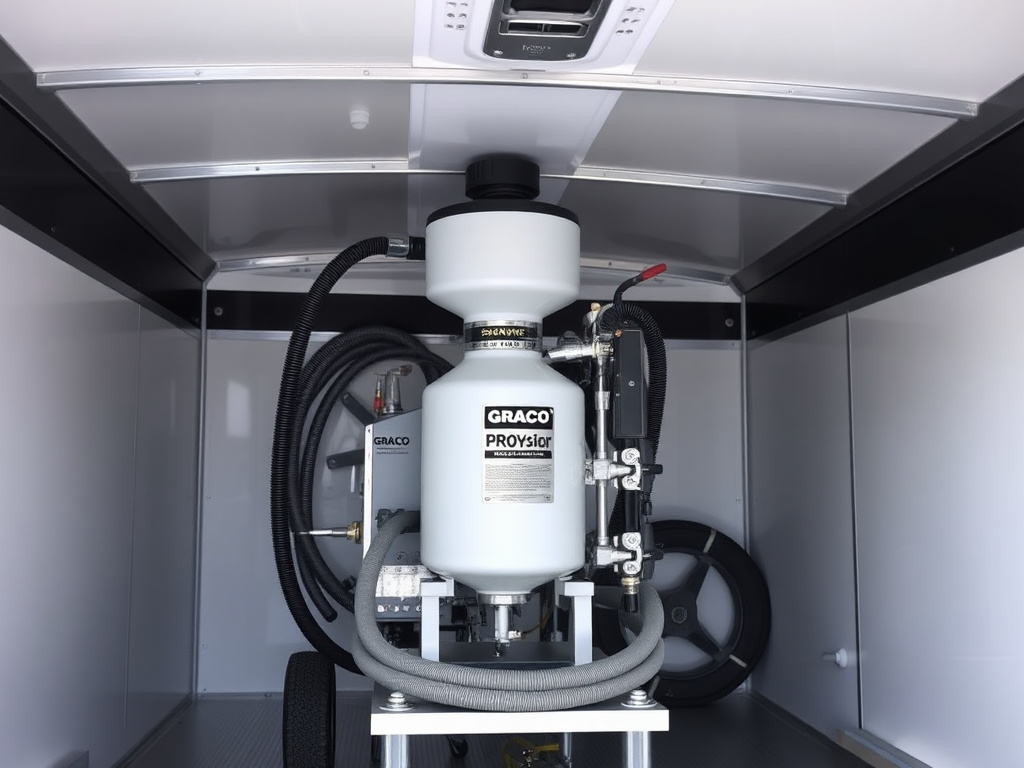
What's Actually in a Spray Foam Rig
A spray foam rig is the combination of a proportioner (the plural-component pump that meters and heats A-side and B-side chemical to spec ratio and temperature), a power source, heated hose, a spray gun, and the platform it all rides on — trailer, truck box, or slide-in unit. Get any one piece undersized or mismatched and the whole rig underperforms, no matter how good the chemical is. We spec rigs around your crew size, average daily board-foot output, and travel radius rather than selling a one-size package.
Every rig we quote is built around a proportioner from one of the three brands that dominate the Canadian SPF market — Graco, PMC, and Gusmer — each with different strengths in output rate, field serviceability, and parts availability across the country.
A rig quote should never be a one-page spec sheet handed over without context. We walk through your typical job mix — residential retrofit vs. commercial large-format spraying, average daily square footage, and how far your crew typically travels from the shop — and size every component of the rig around those real numbers instead of a generic "starter package." A rig that's right-sized for your actual workload pays for itself faster than the cheapest unit on the lot ever will.
Proportioner Comparison
Graco Reactor
- Output
- Up to 12 lb/min
- Ratio Control
- Electronic (E-Series)
- Parts Network
- Widest in Canada
- Best For
- High-volume commercial crews
PMC
- Output
- Up to 10 lb/min
- Ratio Control
- Mechanical / hydraulic
- Parts Network
- Strong, growing
- Best For
- Field-serviceable simplicity
Gusmer
- Output
- Up to 8 lb/min
- Ratio Control
- Mechanical
- Parts Network
- Moderate
- Best For
- Rugged, low-electronics ops
Trailer, Truck-Mounted, or Slide-In?
Trailer Rigs
The most common configuration for growing crews — full standing workspace, easy proportioner service access, and detachable from the tow vehicle for multi-crew flexibility.
Truck-Mounted Rigs
Everything built into a dedicated box truck. No trailer to back up or store, faster highway travel, but the whole unit is off the road when the truck's in for service.
Slide-In Rigs
Compact proportioner packages that slide into a pickup bed. Lowest upfront cost and best for one- or two-man crews covering short travel radii.
Sizing to Crew Output
Match rig output rate to your daily board-foot target — an undersized proportioner throttles a two-man crew all day; an oversized one wastes fuel and capital on a solo operator.
Diesel vs. Gas Generators
Diesel generators dominate Canadian rig builds for a reason: better cold-start reliability at low temperatures, longer duty-cycle life under continuous proportioner load, and better fuel efficiency on multi-day jobs where the rig runs 8+ hours a day. Gas generators cost less upfront and work fine for lighter-duty slide-in setups, but most full-time commercial crews spec diesel once they're running the rig five days a week through a Canadian winter.
Power Sizing Guidelines
Plan for a minimum 20 kW diesel generator on a two-proportioner or high-output single-gun trailer rig, with additional headroom if you're also running hose heat, air compressors, and shop lighting off the same unit. Undersized generators cause voltage sag that shows up as inconsistent hose heat and drifting ratio control — a common, misdiagnosed cause of off-ratio spraying that gets blamed on the chemical instead of the power supply.
Rig Configuration Comparison
A general guide for matching platform to crew size and travel pattern. Final specs are built around your actual job mix.
| Product | Typical Output | Crew Size | Travel Radius | Upfront Cost |
|---|---|---|---|---|
| Trailer Rig | High | 2–4 crew | Regional / provincial | Highest |
| Truck-Mounted Rig | High | 2–4 crew | Regional / highway-heavy | High |
| Slide-In Rig | Moderate | 1–2 crew | Local / short-haul | Lowest |
New Builds vs. Refurbished Rigs
A new fully equipped rig in Canada typically runs $150,000–$250,000+ depending on proportioner brand, platform, and hose/gun package — a significant capital outlay for a first-time buyer or a crew adding a second unit. A refurbished rig, rebuilt to spec with new wear parts, tested proportioner internals, and fresh hose, can cut that number substantially while still carrying a service warranty on the rebuilt components.
The right call depends on total cost of ownership, not just sticker price — a well-rebuilt proportioner from a reputable source can outlast a poorly maintained new unit. We walk every buyer through the trade-offs, and financing is available on both new and refurbished packages through our rig financing program.
Regional freight access is also worth factoring into the new-vs-refurbished decision. Contractors in northern and remote areas often lean toward proportioner brands with the deepest Canadian parts network so a warranty repair or a rebuild component doesn't sit in transit for a week while the rig sits idle. We can walk through parts-access realities for your specific service area before you commit to a platform.
Rig & Proportioner FAQs
Graco Reactor vs. PMC proportioner — which is better for a Canadian climate?+
Both perform reliably in Canadian conditions when properly winterized and housed. Graco's electronic ratio control gives tighter precision and the widest Canadian parts/service network; PMC's mechanical systems are prized for field-serviceability when a proportioner goes down on a remote site.
How much does a fully equipped spray foam rig cost in Canada in 2026?+
New, fully equipped trailer rigs typically run $150,000–$250,000+ depending on proportioner brand, output capacity, generator sizing, and hose/gun package. Refurbished rigs can run meaningfully less while carrying a service warranty on rebuilt components.
What's the difference between buying new vs. a refurbished rig?+
New rigs carry full manufacturer warranty and zero prior wear. Refurbished rigs are rebuilt to spec with tested internals and new wear parts at a lower price point — a strong option for first-time buyers watching capital outlay closely.
What generator size do I need to run a spray foam rig in Canada?+
Plan for a minimum 20 kW diesel generator on a standard trailer rig, sized up if you're also running hose heat, compressors, and lighting off the same unit. Diesel is the standard for full-time crews due to cold-start reliability and duty-cycle life.
How do I winterize my spray foam rig for cold-weather jobs?+
Insulate or heat the chemical storage bay, keep hose heat systems tested before each cold-season job, verify generator cold-start reliability ahead of the season, and drain/protect any water-based systems (air compressor tanks, wash-down lines) against freeze damage.
How often should proportioner pumps and hoses be serviced?+
Daily flush and lubrication per manufacturer schedule, with a full pump and heat-band inspection every 250–500 operating hours depending on duty cycle. Heated hoses should be pressure- and continuity-tested each season before the first cold-weather job.
Build Out Your Fleet
From a first slide-in unit to a full trailer rig, we spec proportioner, power, and platform to your crew's actual output targets.