Training & Support
Training & Support for New Rig Buyers
A rig sitting in your driveway with no one showing you how to calibrate it is a liability, not an asset. Every equipment purchase comes with onboarding support, and every account gets access to our technical support line — whether you bought your rig from us three days ago or three years ago.
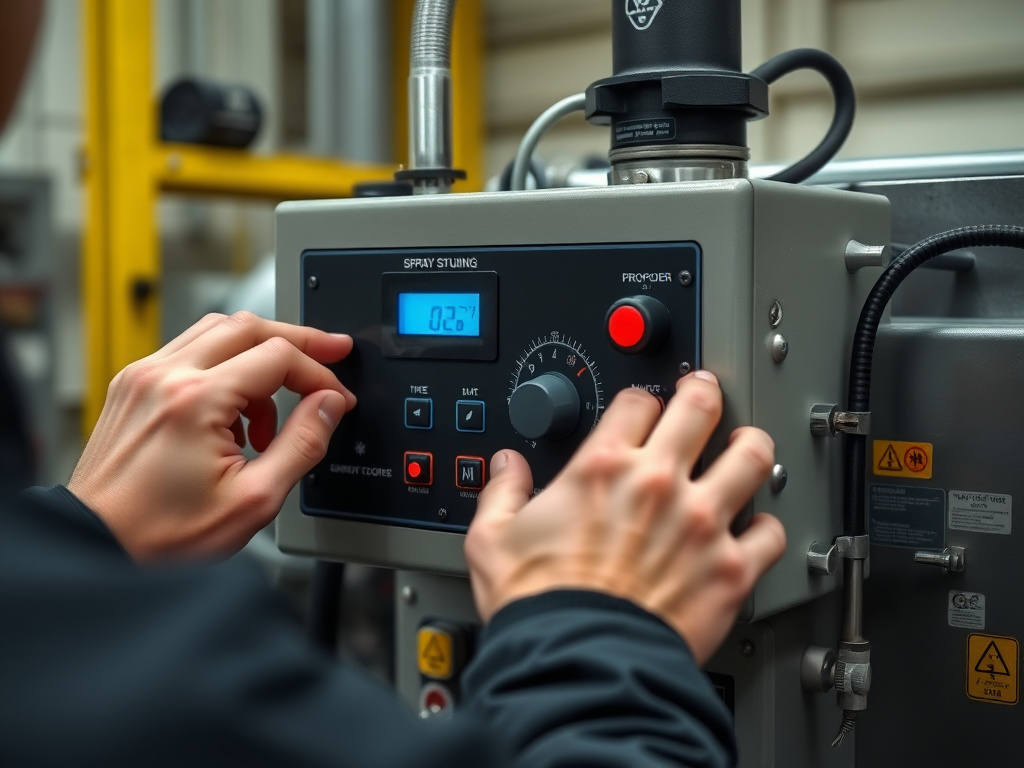
Onboarding when you buy your first rig
Most first-time rig buyers are experienced applicators who've sprayed for someone else's business, not necessarily someone who has calibrated a proportioner from a cold start or diagnosed a ratio issue on their own equipment. Our onboarding covers exactly that gap — getting you from "the rig is delivered" to "I trust this rig on a customer's job" without burning a week of billable time figuring it out alone.
What onboarding covers
Delivery walkthrough
A full run-through of your specific proportioner, generator, and hose setup at delivery or first start-up.
Calibration training
Hands-on ratio calibration and test-shot procedure so you can verify ratio before every job, not just at delivery.
Preventive maintenance schedule
A written service schedule for your specific model — pump seals, filters, hose inspection intervals.
First-job check-in
A follow-up call after your first paid job to catch small setup issues before they become downtime.
Proportioner setup and calibration walkthroughs
Off-ratio spraying is the single most common cause of failed jobs and callbacks for new rig owners — and it's almost always a setup or maintenance issue, not a chemical problem. Our walkthroughs are built around the proportioner brand you run.
| Product | Graco Reactor | PMC | Gusmer |
|---|---|---|---|
| Calibration method covered | Digital ratio monitoring & test-shot procedure | Mechanical pressure balance & test-shot procedure | Mechanical ratio check & test-shot procedure |
| Typical first walkthrough length | 1.5–2 hours | 1.5–2 hours | 2–2.5 hours |
| Follow-up available | Phone/video + on-site by request | Phone/video + on-site by request | Phone/video + on-site by request |
Technical support hotline
- Access
- All customers, not just current-season buyers
- Common calls
- Off-ratio spraying, hose heat faults, pump troubleshooting
- Rig-down priority
- Call 844-967-5247 for mid-job issues
- Remote diagnosis
- Phone/video walkthrough before dispatching a technician
Transitioning from employee to owner-operator
- Common background
- Experienced applicators buying their first rig
- Gap addressed
- Calibration, maintenance, and business-side ownership of equipment
- Also covered
- Chemical inventory planning, financing, and job pricing basics
- Ongoing resource
- Technical support line stays available after year one
Troubleshooting ratio and off-ratio spraying issues
Off-ratio spraying shows up as poor rise, tackiness, shrinkage, or a chemical smell that lingers longer than it should — and it's usually traced back to one of a short list of causes: cold chemical temperature, a worn pump seal, an unbalanced A/B pressure, or a clogged filter. Our support line walks new owners through this diagnostic checklist first, before recommending a service call, which resolves the majority of field issues without a technician visit or lost job-site time.
SPFA-aligned best practices
Our onboarding and technical support reference Spray Polyurethane Foam Alliance-aligned application, storage, and safety practices, so new contractors are building habits that match industry standard from day one rather than picking up shortcuts that cause quality or safety issues down the line. This includes proper PPE use, WHMIS documentation handling, and chemical storage temperature ranges covered in more depth on our chemicals and PPE & safety pages.
Common first-rig mistakes we help contractors avoid
Most of the calls we get from new rig owners in their first season trace back to a short list of avoidable setup and habit issues, not equipment defects. Working through these during onboarding saves most owners a rough first few months.
Skipping the test-shot before the first pull of the day. Chemical temperature, hose heat, and A/B pressure can all drift overnight, even in a heated shop. A quick test shot before spraying catches a ratio problem on scrap material instead of on a customer's wall — new owners who build this into the start of every job day catch far fewer callbacks than those who trust yesterday's calibration.
Undersizing the generator for the hose length actually being run. A generator that handles the proportioner's base load fine can still sag under a long heated hose run, especially in cold ambient air when the hose heater is working hardest. That sag shows up as inconsistent hose temperature and drifting ratio, and it's one of the more common "is my rig broken" calls that turns out to be a power sizing issue instead.
Spraying cold chemical to save time. Pulling drums straight from an unheated trailer into a cold-weather job without proper warm-up time is one of the fastest ways to get poor rise, shrinkage, and a callback. New owners under schedule pressure are the ones most likely to cut this corner, which is exactly why it's covered explicitly during onboarding rather than assumed as common knowledge.
Treating parts and PPE as a reactive purchase instead of standing inventory. A new owner's first blown mix chamber or torn coverall often happens on a paying job, not in the shop — because nothing was stocked ahead of time. Owners who leave onboarding with a basic spares and PPE kit already on the truck lose far less time to first-season surprises than owners who wait to see what breaks first.
Pricing jobs off list material cost instead of realistic yield. Gun and pump condition, ambient temperature, and substrate all affect actual chemical yield per board foot — pricing a job purely off a manufacturer's theoretical yield number is a common way for a first-year owner to underbid and eat the difference. This is part of why job pricing basics are folded into onboarding alongside the technical calibration training.
Training & support FAQs
How often should proportioner pumps and hoses be serviced?+
Pump seals and filters should be inspected on a set schedule (typically every 200–300 spray hours or per manufacturer guidance), and heated hoses should be visually inspected before every job. We provide a written maintenance schedule specific to your model during onboarding.
What generator size (diesel vs. gas) do I need to run a spray foam rig in Canada?+
Most full-size proportioner and heated hose setups need a diesel generator in the 20–45 kW range; diesel is preferred in Canada for cold-start reliability and fuel availability. We size the generator to your specific proportioner and hose length during rig setup.
How do I winterize my spray foam rig for cold-weather jobs?+
Winterizing covers heated hose insulation checks, chemical warm-up procedure before spraying, generator cold-start prep, and drum storage temperature — all covered in your onboarding walkthrough and in more depth on our chemicals page.
What causes ratio/off-ratio spraying issues and how do I troubleshoot it?+
The most common causes are cold chemical temperature, worn pump seals, unbalanced A/B pressure, or a clogged filter. Our technical support line walks new owners through this checklist before recommending a service visit.
Do you offer proportioner setup and calibration walkthroughs for new rig buyers?+
Yes — every rig purchase includes a hands-on calibration walkthrough specific to your proportioner brand (Graco, PMC, or Gusmer), plus phone/video follow-up support.
I'm transitioning from employee applicator to owning my own rig — what support is available?+
Onboarding is built for exactly this transition, covering calibration and maintenance ownership plus practical basics like chemical inventory planning and job pricing, with technical support staying available well past your first season.
Get your rig running right from day one
Book an onboarding walkthrough with your rig purchase, or call our technical support line any time you need help troubleshooting.