Financing Guide · 8 min read
Financing a Spray Foam Rig in Canada: Options for New and Growing Contractors
Lease-to-own vs. term financing, what Canadian lenders actually require, and real monthly payment ranges for a first rig or a second crew’s rig.
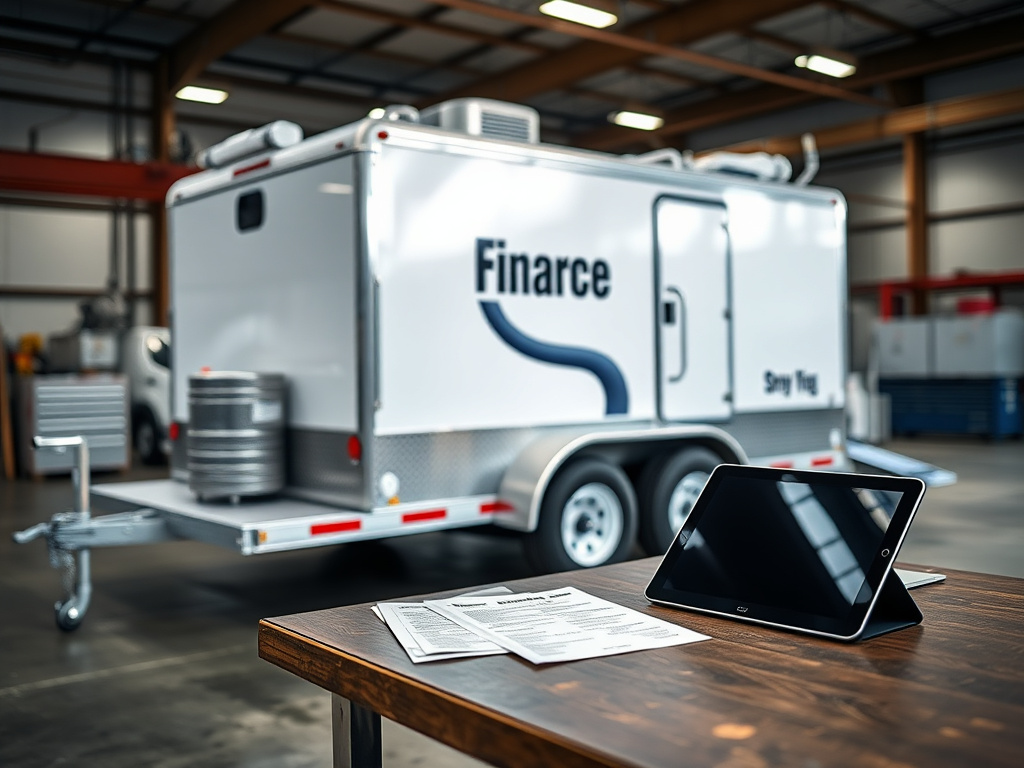
A fully equipped spray foam rig is a $150,000–$250,000+ CAD asset, which puts it well beyond most contractors’ cash-purchase range — and beyond what most business owners would want to tie up in cash even if they could. Nearly every rig on the road in Canada was financed in some form. The details of how matter: the wrong structure can strain cash flow in a slow month, while the right one lets the rig pay for itself out of the revenue it generates.
Lease-to-Own vs. Term Financing
| Product | How It Works | Best For | Ownership Timing |
|---|---|---|---|
| Lease-to-Own | Fixed payments with a buyout option at term end | Preserving cash flow, newer businesses | At end of lease term (or early buyout) |
| Term Loan | Traditional equipment loan, fixed rate and term | Established contractors with credit history | Immediate (loan secured by the rig) |
Lease-to-own structures typically require a smaller upfront commitment and can be easier to qualify for as a newer business, since the lender retains the equipment as collateral through the full term and payments are often structured to track expected usage/revenue. A term loan usually comes with a lower total cost of financing for contractors who already have an established credit history, since ownership transfers immediately and the lender is pricing pure credit risk rather than equipment residual risk.
What Lenders Actually Require
- Time in business. Two or more years of operating history is the easiest tier to qualify for standard rates, but it’s not a hard wall — several lenders active in the Canadian SPF equipment space run startup-friendly programs for newly incorporated contractors, typically at a higher down payment or rate.
- Down payment. Expect to put down roughly 10–20% of the rig’s value. Startups without operating history should budget toward the higher end of that range, or expect a co-signer requirement.
- Business and personal credit. Lenders review both the registered business’s credit profile and, for newer businesses, the owner’s personal credit as a proxy for repayment reliability.
- A chemical supply relationship. Because a spray foam rig has limited resale liquidity on its own, some lenders want to see (or will favorably weigh) a signed chemical supply arrangement that demonstrates the rig will be kept productive and generating revenue.
Interest Rates and Total Cost of Financing
Equipment financing rates for spray foam rigs move with prevailing commercial lending rates plus a risk margin tied to the applicant’s credit profile, time in business, and down payment size. Established contractors with strong business credit and a track record on prior equipment typically land at the lower end of available rates; new businesses without that history sit higher, sometimes meaningfully so, until a payment history is established. Because rig financing terms commonly run 5–7 years, even a modest rate difference compounds into a real dollar gap in total cost over the life of the loan — it’s worth getting quotes from more than one lender rather than accepting the first offer, particularly on a first rig where approval itself can feel like the hard part.
Term length is its own lever on total cost: a longer term lowers the monthly payment but increases total interest paid over the life of the loan, while a shorter term does the opposite. Contractors with strong, predictable job volume from day one can sometimes justify a shorter term to reduce total financing cost; contractors still building their customer base often prioritize the lower monthly payment of a longer term to protect cash flow through the ramp-up period, even at a higher total cost.
Capital Cost Allowance: The Tax Side of Buying Equipment
Beyond the financing structure itself, Canadian contractors purchasing a rig should talk to their accountant about Capital Cost Allowance — the federal tax mechanism that lets a business deduct a portion of an equipment purchase’s cost against income each year rather than expensing it all at once. Spray foam rigs generally fall under equipment classes that allow a meaningful first-year deduction, and some federal accelerated-investment provisions have periodically allowed a larger first-year claim on qualifying new equipment. This isn’t financing advice and the specific class and rate depend on current federal rules and your business structure, but it’s a real factor in the true after-tax cost of a rig purchase and worth reviewing with an accountant before finalizing the timing of a purchase, especially near a fiscal year-end.
Bundling Equipment Financing With a Chemical Supply Agreement
Some Canadian suppliers and lenders will structure equipment financing alongside a chemical supply agreement — committing to purchase chemical sets from a given supplier over the financing term in exchange for improved financing terms, priority parts access, or locked-in volume pricing. For a new contractor, this kind of bundled arrangement can meaningfully improve approval odds, since it gives the lender confidence the rig will be run productively rather than sitting idle. It’s worth asking directly whether a supplier offers this kind of bundled structure before shopping financing independently.
Preparing a Financing Application
A well-prepared application moves faster and often lands better terms than one assembled on the fly. Before applying, have your business registration documents, the last two years of financial statements or tax filings (or, for a genuine startup, a realistic business plan and revenue projection), a personal credit report, and a clear equipment quote in hand showing exactly what you’re financing and at what price. Lenders move faster on applications where the equipment being financed is precisely specified rather than a rough budget range — get a firm quote from your supplier before submitting.
It also helps to have a short written explanation of your business plan ready, even informally — expected crew size, target job types, and how you plan to generate the volume needed to service the payment. Lenders evaluating a startup contractor are often more comfortable approving an application that shows the owner has thought through realistic revenue assumptions, rather than one that simply states an intention to “start a spray foam business.”
Typical CAD Monthly Payment Ranges
Exact payments depend on rig price, term length, rate, and down payment, but as a general planning range: a $150,000 CAD rig financed over 5–7 years with a 10–20% down payment typically lands in the low-to-mid $2,000s–$3,000s CAD per month before interest rate and credit-tier adjustments. A $250,000+ high-output commercial rig scales up proportionally. Run the math against your expected monthly revenue per crew before committing — a rig payment should be a manageable fraction of one crew’s monthly billing, not a number that only works if every week is a full-capacity week.
Common Financing Mistakes New Contractors Make
- Shopping for a rig before shopping for financing. Falling in love with a specific rig configuration before knowing your real approved budget range often leads to either overspending or a disappointing scramble to downsize the order after the fact. Get pre-qualified first.
- Underestimating the down payment timeline. A 10–20% down payment on a $150,000–$250,000 rig is a real number to save toward — contractors who start the financing conversation assuming they can put down 5% are frequently surprised, and it’s better to know that early than after an application is already in progress.
- Sizing the payment to a best-case revenue month. A rig payment calculated against your busiest possible month, rather than a realistic average across slower shoulder seasons, creates cash-flow strain the first time bookings dip.
- Not asking about early buyout terms on a lease. If a lease-to-own structure has a favorable early buyout option, paying it off ahead of schedule once revenue ramps up can meaningfully reduce total financing cost — but only if you know the terms exist and negotiate for them upfront.
Financing a First Rig vs. Adding a Second Crew’s Rig
First-rig financing is evaluated almost entirely on the owner’s personal and business credit profile, since there’s no operating history to lean on. A second (or third) rig application looks very different — lenders can underwrite against the business’s actual revenue history, existing equipment performance, and cash flow, which typically means better rates, lower down payment requirements, and faster approval than the first rig took. That’s one more reason to treat the first rig’s financing terms as a starting point, not a ceiling — the second rig usually finances easier once the business has a track record.
It’s worth planning the second rig’s financing timeline before you need it, not after a crew is turning away work. Contractors who start the conversation with their lender a season ahead of an expected second-crew purchase — sharing updated revenue numbers as they come in — typically move through underwriting faster than those who apply cold the moment a growth decision is made.
Ready to see what a rig would cost on your business? Get pre-qualified before you shop so you know your real budget range — see our financing and leasing options or read our full rig buying guide to size the right rig for your financing budget.
Get Pre-Qualified for Rig Financing
Tell us about your business and we'll walk you through lease-to-own and term financing options built for Canadian SPF contractors.