Buyer’s Guide · 16 min read
How to Choose a Spray Foam Rig in Canada: The Complete 2026 Buyer’s Guide
Everything a new or scaling SPF contractor needs to know before signing on a rig — proportioner comparisons, trailer vs. truck-mounted configurations, generator sizing, financing ranges, and a pre-purchase checklist built for Canadian conditions.
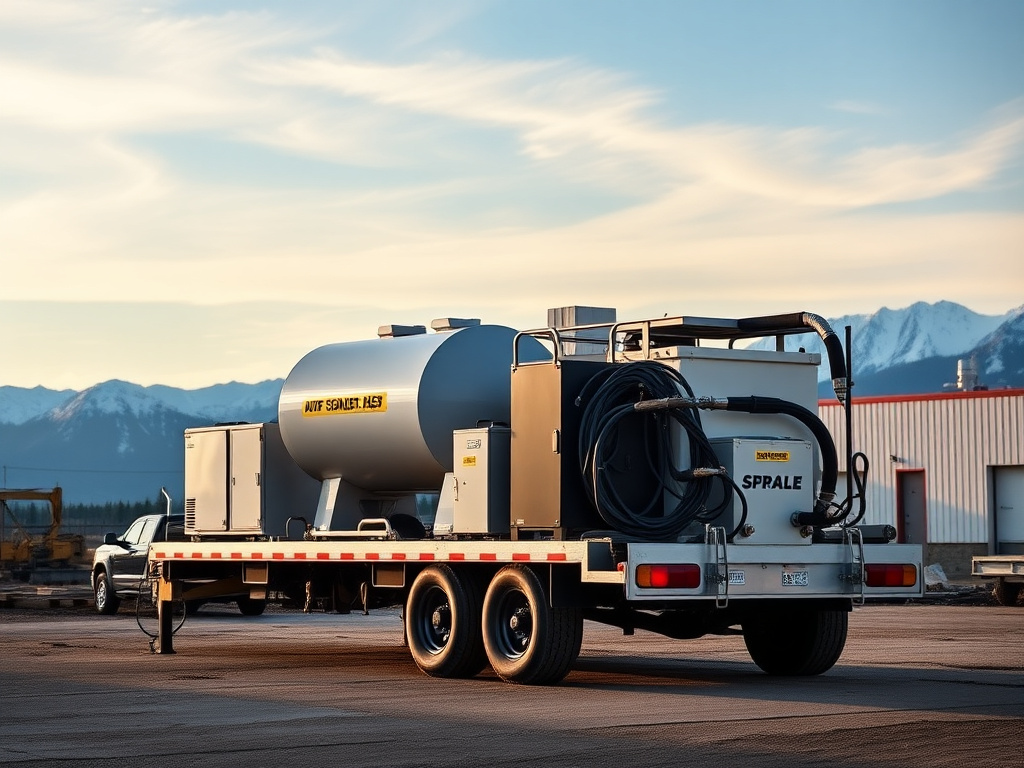
A spray foam rig is not one product — it’s a system. At its core, a working rig is a proportioner (the machine that heats, pressurizes, and meters the A-side and B-side chemicals at a fixed ratio), a power source (generator), heated hose running from the proportioner to the gun, and the spray gun itself, all packaged into either a trailer, a truck box, or a slide-in unit. Get any one piece wrong for your business and you either overpay for capacity you don’t use or undersize a rig that can’t keep your crew fed on a big commercial day.
This guide is written for two audiences: contractors buying their first rig to leave employee work behind and start an independent SPF business, and established contractors adding a second or third crew. Both groups ask the same core questions — which proportioner, what configuration, new or refurbished, and how to finance it — and the right answer depends heavily on Canadian-specific factors that U.S. buying guides don’t cover: cold-start generator performance, freight access to parts in northern and remote regions, and CAD pricing that moves with exchange rates on imported components.
Proportioner Comparison: Graco vs. PMC vs. Gusmer
The proportioner is the single most expensive and most important component on the rig. It controls chemical ratio, temperature, and pressure — the three variables that determine whether a spray pass comes out on-spec or gets rejected. Three manufacturers dominate the Canadian market:
- Graco Reactor series (E-30, E-XP2, H-25/H-40/H-50) — the most widely serviced platform in Canada, which matters when a part fails on a job site. Electric units (E-series) run 8–10 lb/min output and suit residential/light-commercial crews; hydraulic H-series units scale to 12–20+ lb/min for continuous commercial output. Digital ratio and temperature monitoring is standard, and the Reactor’s onboard diagnostics flag off-ratio conditions before they show up in the foam.
- PMC (Polyurethane Machinery Corporation) proportioners (PH-2, PH-40, AP-2 gun platform) — known in the field for mechanical durability and positive-displacement pump design that tolerates harder use with less precision maintenance. PMC units are common on rigs that see heavy commercial/industrial spraying where uptime matters more than the latest digital interface.
- Gusmer (legacy H-20/H-35 hydraulic units) — largely a used/refurbished-market proportioner today after the platform was absorbed into Graco’s product family. Still common on older Canadian rigs and prized for parts simplicity, but new-unit availability is limited — budget for a rebuild cycle if buying used Gusmer equipment.
| Product | Typical Output | Ratio Control | Field Service | Parts Availability (Canada) |
|---|---|---|---|---|
| Graco Reactor | 8–20+ lb/min | Digital, sensor-monitored | Widest network of trained techs | Excellent |
| PMC | 8–18 lb/min | Mechanical/positive-displacement | Simpler pump rebuilds | Good, fewer branches |
| Gusmer (legacy) | 8–15 lb/min | Hydraulic, manual tuning | Straightforward but dated | Limited, used-market only |
Output rates vary by specific model and hose run length — treat these as planning ranges, not spec-sheet guarantees.
There isn’t a universally “correct” answer between Graco and PMC — both are proven platforms running daily across Canada, and the better fit depends on how your business is structured to handle service and repair. If you lean on a dealer service network and want the fastest possible troubleshooting for a less experienced crew, Graco’s digital diagnostics and wider Canadian tech network reduce operational risk. If you run with a strong in-house mechanic and prioritize mechanical simplicity over onboard electronics, PMC’s positive-displacement design holds up well to hard daily use with straightforward field rebuilds. For a full breakdown of the two platforms, see our Graco vs. PMC comparison.
Trailer vs. Truck-Mounted vs. Slide-In Rigs
The configuration you choose affects daily setup time, resale flexibility, and how far your crew can travel between jobs — a bigger factor in Canada than in more densely populated markets.
- Enclosed trailer rigs (16–24 ft) are the default choice for most growing contractors. The proportioner, generator, chemical racks, and hose reels live inside a weatherproof, lockable trailer that any pickup or one-ton truck can tow. Trailers keep the rig separate from the tow vehicle, so a mechanical issue with either doesn’t take down the whole operation, and the trailer can be swapped between trucks as your fleet grows.
- Truck-mounted / box truck rigs integrate the equipment permanently into a cube van or box truck. Setup at each job is faster since there’s no trailer to back in and level, which suits crews doing several smaller jobs per day in denser urban markets. The tradeoff is flexibility — if the truck needs major mechanical work, the whole rig is down, and resale means selling the rig and the vehicle together.
- Slide-in units mount the proportioner and generator on a removable skid that drops into a pickup bed. This is the lowest-cost entry point and works well for a single-operator startup testing the business before committing to a full trailer build, but daily output is limited by smaller hose/reel capacity.
For a one- or two-crew business planning to grow, an enclosed trailer is almost always the better long-term investment: it’s the easiest configuration to finance, the easiest to resell, and the easiest to duplicate when you add a second crew.
Trailer size and axle rating also affect what you can legally tow and with what vehicle. A 16–20 ft trailer loaded with a proportioner, chemical racking, and a generator can push into tandem-axle territory once you account for full chemical drums — a full 55-gallon set weighs roughly 500 lb, and most rigs carry multiple sets plus spare hose and parts. Confirm the trailer’s gross vehicle weight rating against your tow vehicle’s rated towing capacity before finalizing a build, and check provincial licensing requirements for trailer weight class, since heavier combinations may require a different driver’s license endorsement depending on your province.
Diesel vs. Gas Generators for Canadian Conditions
Most Canadian rig builders spec diesel generators by default, and for good reason. Diesel engines deliver steadier torque under the continuous electrical load a hydraulic proportioner demands, and diesel fuel is more broadly available at job sites and in rural/northern communities where gas stations may be limited to regular unleaded. Diesel units also tend to have longer service intervals under continuous-duty spraying schedules.
Gas generators are lighter, cost less upfront, and are easier to source parts for in a pinch — a reasonable choice for a lower-output electric proportioner rig doing residential retrofit work. The real Canadian-specific issue is cold starting: gas engines can struggle to start reliably below −20°C without a block heater or battery-tender setup, while diesel units built for Canadian rigs are typically spec’d with cold-weather starting aids (glow plugs, winter-blend fuel compatibility) as standard. If your rig runs through a Canadian winter — and most do — diesel is the safer default unless your crew works exclusively in a milder coastal climate.
Fuel consumption is also worth budgeting into daily operating cost, not just the generator purchase price. A diesel generator sized for a hydraulic proportioner running a full spray day will burn a meaningful amount of fuel over an 8–10 hour shift, and that cost scales with how many spray-hours per day your crew actually logs. Contractors sizing a generator should match output capacity to the proportioner’s actual electrical draw rather than over-buying generator capacity “just in case” — an oversized generator running well below its rated load burns fuel inefficiently and can, over time, contribute to carbon-fouling issues in diesel engines not run near their design load.
Heated Hose Systems: Length, Wattage, and Why They Matter
Chemical has to stay within a tight temperature window — typically 120–150°F — from the proportioner all the way to the gun tip, or the ratio and rise characteristics of the foam drift off-spec. Heated hose does that job, and it’s not optional equipment for year-round Canadian work. Hose runs are typically sold in 100 ft sections and combined to reach 150–300 ft total length depending on job site access, with a shorter unheated or lightly-heated “whip hose” connecting the main run to the gun for maneuverability.
Longer hose runs need proportionally more wattage to hold temperature, especially outdoors in sub-zero conditions where ambient heat loss is constant. Undersized heated hose is one of the most common causes of off-ratio spraying on Canadian job sites in winter — the chemical arrives at the gun cooler than the proportioner reads it, and the foam doesn’t rise correctly even though every gauge on the machine looks normal. When budgeting a rig, don’t treat hose length and wattage as an afterthought behind the proportioner choice — size it for your coldest realistic job-site conditions, not an average day.
Hose management on the trailer matters almost as much as the hose spec itself. Reel systems that let a crew pay out and retrieve 200–300 ft of heated hose without manually coiling it by hand save real time across a multi-stop day, and reduce wear on the hose jacket compared to dragging and re-coiling by hand repeatedly. When comparing rig quotes, check whether reel systems are included or an add-on, and whether the reel is rated for the hose weight and length you plan to run — an undersized reel is a common point of premature hose failure on rigs that get heavy daily use.
New vs. Refurbished Rigs: Total Cost of Ownership
A refurbished rig typically sells for 40–60% of an equivalent new package and can be a smart entry point for a first-time buyer with limited capital — provided the rebuild was done properly and comes with documentation on pump hours, hose condition, and generator service history. The risk with used equipment is hidden wear: proportioner pumps and seals degrade gradually, and a unit that sprayed fine for the seller can start showing ratio drift within weeks under your crew’s daily volume.
New rigs cost more upfront but come with a full manufacturer warranty, current digital ratio-monitoring technology, and a known maintenance clock starting at zero. For a contractor planning to run a rig hard — five or six days a week, multiple sets a day — the lower unplanned-downtime risk of a new rig often pays for the price difference within the first one to two years simply by avoiding lost job days. As a rule of thumb: buy refurbished to test the business model or add a backup rig; buy new when the rig is your primary income-producing asset.
If you do go the refurbished route, insist on a documented inspection before money changes hands — not a verbal assurance that “it runs great.” At minimum, request pump hour totals, the date and scope of the last rebuild, hose pressure-test results, and a live test spray you can watch in person or on video. A seller unwilling to provide any of that is telling you something about the equipment’s condition even if they don’t say it directly. Budget separately for a proportioner rebuild in the first year of ownership on any refurbished unit without recent documented service — treating that as a near-certain cost rather than a worst-case scenario keeps your total cost estimate honest.
Financing a Rig: What Lenders Look For and Typical CAD Ranges
A fully equipped new spray foam rig — trailer, proportioner, diesel generator, heated hose package, gun, and chemical racking — typically runs $150,000–$250,000+ CAD depending on proportioner output class and hose/generator specification. Entry-level electric proportioner packages can come in under that range; high-output hydraulic rigs built for continuous commercial spraying push toward the top and beyond.
Equipment lenders financing spray foam rigs generally want to see: a down payment in the 10–20% range, a registered business (even a newly incorporated one), a personal or business credit check, and in many cases a signed chemical supply agreement, since the rig has limited resale liquidity on its own without a track record. New/startup contractors without two years of business history aren’t automatically excluded — several lenders active in the Canadian SPF space run startup-friendly programs, but expect a larger down payment or a co-signer requirement to offset the added risk. See our full financing breakdown for lease-to-own vs. term-loan structures and monthly payment ranges.
Sizing Your Rig to Your Business
Rig capacity should be sized to your realistic daily board-foot output, not the biggest machine you can qualify to finance. A two-person residential retrofit crew commonly sprays in the range of 3,000–5,000 board feet on a full day, which an electric Reactor-class proportioner in the 8–10 lb/min range handles comfortably with room to spare. Commercial and large-format crews — metal building interiors, large attics, industrial cold storage — regularly need sustained output above that, which is where hydraulic units in the 12–20+ lb/min class earn their higher price tag.
Oversizing a rig doesn’t just waste capital — a proportioner running well below its rated output on small jobs day after day can be harder to keep dialed in on ratio than a correctly sized unit running near its comfortable operating range. Match gun tip size, hose diameter, and proportioner class to the job mix you actually book, and plan the upgrade to a second rig (rather than a bigger single rig) once volume justifies a second crew.
As a practical planning exercise, map your last two or three months of completed jobs against board-foot totals and job duration rather than guessing at an average day. A contractor who books mostly attic and crawlspace retrofit work in the 2,000–3,500 board-foot range per job rarely benefits from a rig sized for continuous 15+ lb/min output — the proportioner spends most of its time well under load, which does nothing to speed up jobs that are limited by crew labor and access, not chemical flow rate. A contractor booking larger commercial spec work — metal building shells, large industrial roof decks — sees the opposite problem with an undersized rig: output becomes the bottleneck, stretching multi-day jobs longer than necessary and tying up crew labor waiting on the machine rather than the other way around.
When you do add a second crew, resist the temptation to simply duplicate whatever the first rig happened to be. Review whether the job mix has shifted since the first purchase — a business that started in residential retrofit and has since picked up steady commercial work may be better served by a higher-output second rig even if the first one stays sized for smaller jobs, rather than forcing both crews onto identical equipment for the sake of parts standardization alone.
Provincial and Regional Considerations
Where you operate changes what “the right rig” looks like. Contractors working northern and remote regions — northern Ontario, northern Quebec, Manitoba, the territories — should weight cold-start reliability and parts logistics more heavily than contractors working the Lower Mainland or southern Ontario corridor, where a failed part can be replaced same-day. If a rig goes down 400 km from the nearest branch, freight time on a proportioner pump kit or a heated hose section becomes the real cost of downtime, not the part itself.
Regional climate also shapes the spec sheet. Prairie and northern contractors (AB, SK, MB, and the territories) routinely see extended stretches well below −20°C, which pushes diesel cold-start packages and higher-wattage heated hose from “nice to have” to baseline requirements. Coastal BC and Atlantic Canada contractors deal with less extreme cold but more persistent damp conditions, which shifts the priority toward corrosion-resistant hardware and reliable trailer weatherproofing. Ontario and Quebec’s southern corridors sit in between — genuinely cold winters but dense supplier and service networks that reduce the urgency of carrying extra spares on the rig itself.
For remote-market contractors, it’s worth carrying a broader spares kit on the rig from day one — extra mix chamber, spare hose section, backup transfer pump — and confirming your supplier offers rush parts shipping to your region before you commit to a proportioner brand. See our shipping and delivery page for province-by-province timelines.
Common Mistakes First-Time Rig Buyers Make
A few patterns show up repeatedly with first-time buyers, and most are avoidable with a little planning ahead of the purchase:
- Buying maximum output “for growth.” A high-output hydraulic rig sitting well under its rated capacity on residential jobs costs more to finance and maintain than a right-sized rig, and it’s usually cheaper in the long run to upgrade or add a second rig once volume actually justifies it.
- Treating the generator and hose as an afterthought. Buyers frequently spend most of their research time comparing proportioner brands and then accept whatever generator and hose package a builder defaults to, even when it’s undersized for their region’s climate.
- Skipping a documented inspection on used equipment. Buying a refurbished rig on a handshake and a clean-looking exterior, without pump hour records or a documented test spray, transfers all the hidden-wear risk onto the buyer.
- Shopping for the rig before shopping for financing. Committing to a specific configuration before knowing your real approved budget range often means a disappointing renegotiation once financing terms come back.
- Underestimating onboarding time. A new proportioner has a real calibration and technique learning curve, even for an experienced sprayer moving between brands — budget a break-in period rather than expecting day-one production-level output.
Pre-Purchase Checklist
Before signing on any rig — new or used — work through this list:
- Confirm proportioner output class matches your realistic daily board-foot targets, not your aspirational ones.
- Verify generator is diesel-spec’d with cold-weather starting aids if you’ll spray through a Canadian winter.
- Check heated hose length and wattage against your coldest realistic job-site conditions.
- For refurbished units, request pump hour records, hose condition notes, and generator service history in writing.
- Confirm parts availability and shipping timelines to your service region before committing to a proportioner brand.
- Get financing pre-qualification in writing before you shop, so you know your real budget range.
- Ask whether onboarding support, calibration walkthroughs, and a technical support line are included with the purchase.
Rig Buying FAQ
How much does a fully equipped spray foam rig cost in Canada in 2026?+
A new, fully equipped rig — trailer, proportioner, diesel generator, heated hose package, and gun — typically runs $150,000–$250,000+ CAD depending on proportioner output class. Entry-level electric proportioner packages can come in below that range; high-output hydraulic rigs for continuous commercial spraying can exceed it.
Should I buy a new or refurbished rig for my first business?+
Refurbished rigs typically run 40–60% of new pricing and can be a reasonable way to enter the business with less capital, provided you get documented pump hours and service history. New rigs carry a full manufacturer warranty and a maintenance clock starting at zero, which lowers unplanned-downtime risk once you're running the rig hard.
Do I need a diesel or gas generator for a Canadian rig?+
Diesel is the standard default for Canadian rigs because of steadier torque under continuous load and more reliable cold starting below −20°C. Gas generators are lighter and cheaper upfront but can struggle to start reliably in deep winter without additional cold-start equipment.
How do I know what proportioner output I actually need?+
Size the proportioner to your realistic daily board-foot output, not your maximum aspirational output. A two-person residential retrofit crew commonly needs 8–10 lb/min; sustained commercial or large-format spraying typically calls for 12–20+ lb/min hydraulic units.
Get a Rig Quote Built for Your Business
Tell us your crew size, job mix, and region — we'll help you spec the right proportioner, configuration, and financing plan.